
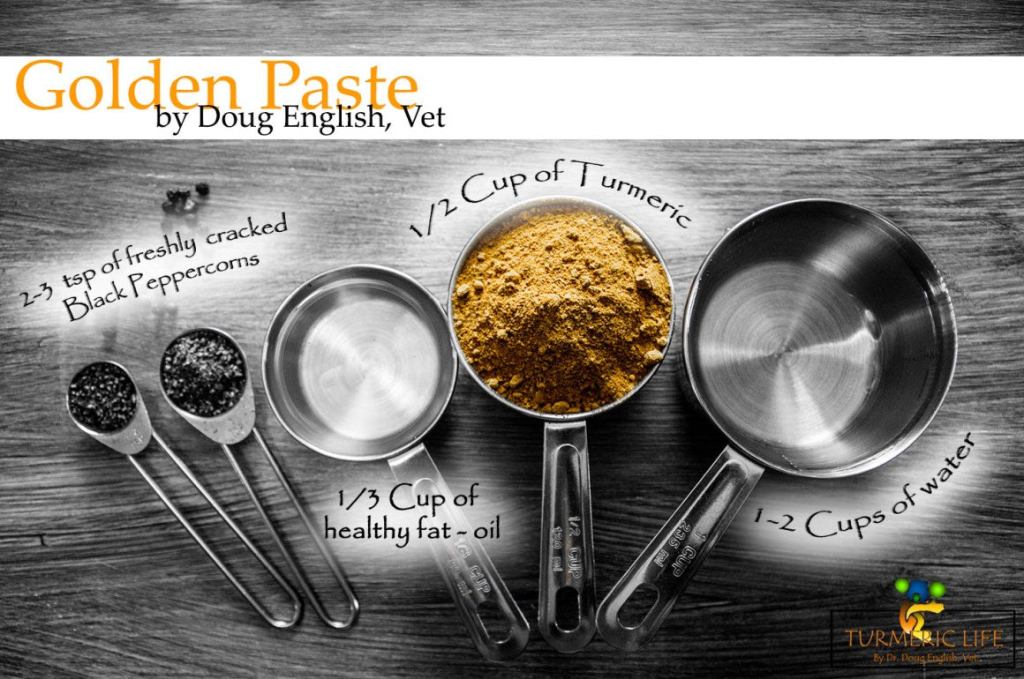
Golden Paste is the way to take turmeric that I have recommended in the Turmeric User Group since 2012. It’s cheap, it keeps in the fridge, and it suits people and a wide range of animals: dogs, cats, horses, chickens and other birds, mice, rats, and even reptiles. Here’s the recipe, and why each ingredient matters.
Dr Doug English BVSc
Ingredients
- 1/2 cup (60 g) turmeric powder
- 1 cup (250 mL) water, plus extra if needed
- 1/3 cup (80 mL) cold-pressed oil: raw coconut, extra virgin olive oil or another suitable oil
- 2–3 teaspoons freshly cracked black pepper
- Optional: replace half the oil with linseed (flaxseed) meal, i.e. 1/6 cup (40 mL) oil plus 1/6 cup linseed meal
Method
- Put the turmeric and water in a pan, bring to the boil, then lower the heat and simmer for 7–10 minutes, stirring, until it forms a thick paste. Add a little water if it gets too dry.
- Turn off the heat and stir in the oil and, if using, the linseed (flaxseed) meal.
- Let it cool for about 10 minutes until warm rather than hot.
- Stir in the pepper thoroughly.
- Spoon into a clean jar with a lid and refrigerate.
If your turmeric is labelled “raw”, simmer it for at least 30 minutes.
Why each ingredient is there
Turmeric powder. Whole turmeric contains curcumin plus many other compounds. We prefer it to concentrated curcumin extracts. → Turmeric vs curcumin capsules
Cooking with water. Gentle cooking makes turmeric easier for people and most animals to digest.
Oil. Turmeric’s active compounds dissolve in fat (lipids), not water, so oil is essential for them to get absorbed. This is why stirring turmeric powder into a glass of water does very little.
Freshly cracked black pepper. Piperine in pepper slows the breakdown and excretion of curcumin, so it stays in the body longer. Piperine degrades quickly once ground, so crack it fresh rather than using pre-ground pepper.
Linseed (flaxseed) meal. The lignans and fibre help the gut microbiome metabolise the curcumin in turmeric, making it more effective. Chia seed is also beneficial.
You can replace up to half the oil with linseed (flaxseed) meal. Whole linseed is about 40% oil, so the meal still supplies fat, and its lignans and fibre help the gut microbiome make use of the curcumin.
Storage
Keep it in the fridge for 2–3 weeks. Freeze anything you won’t use in two weeks; silicone ice-cube trays make handy single servings.
How much?
Start with about 1/4 teaspoon twice a day with food, and build up slowly. → How much turmeric should I take?
Tips
- Leave out honey or sweeteners.
- Can’t tolerate pepper? You can leave it out, but the paste won’t be as effective.
- For dogs and horses, adding a tablespoon of Ceylon cinnamon (not cassia) at the end of cooking can reduce the “cat pee” smell some animals get when they start.
Before you start, check the Safety page if you take any medication.
Where to get it: Turmeric Life’s high-potency turmeric powder is available at turmericlife.com.au ↗
Made Golden Paste before? Share your tips in the comments below.


Leave a Reply